


Chen Chi-Kwan(陳其寬)


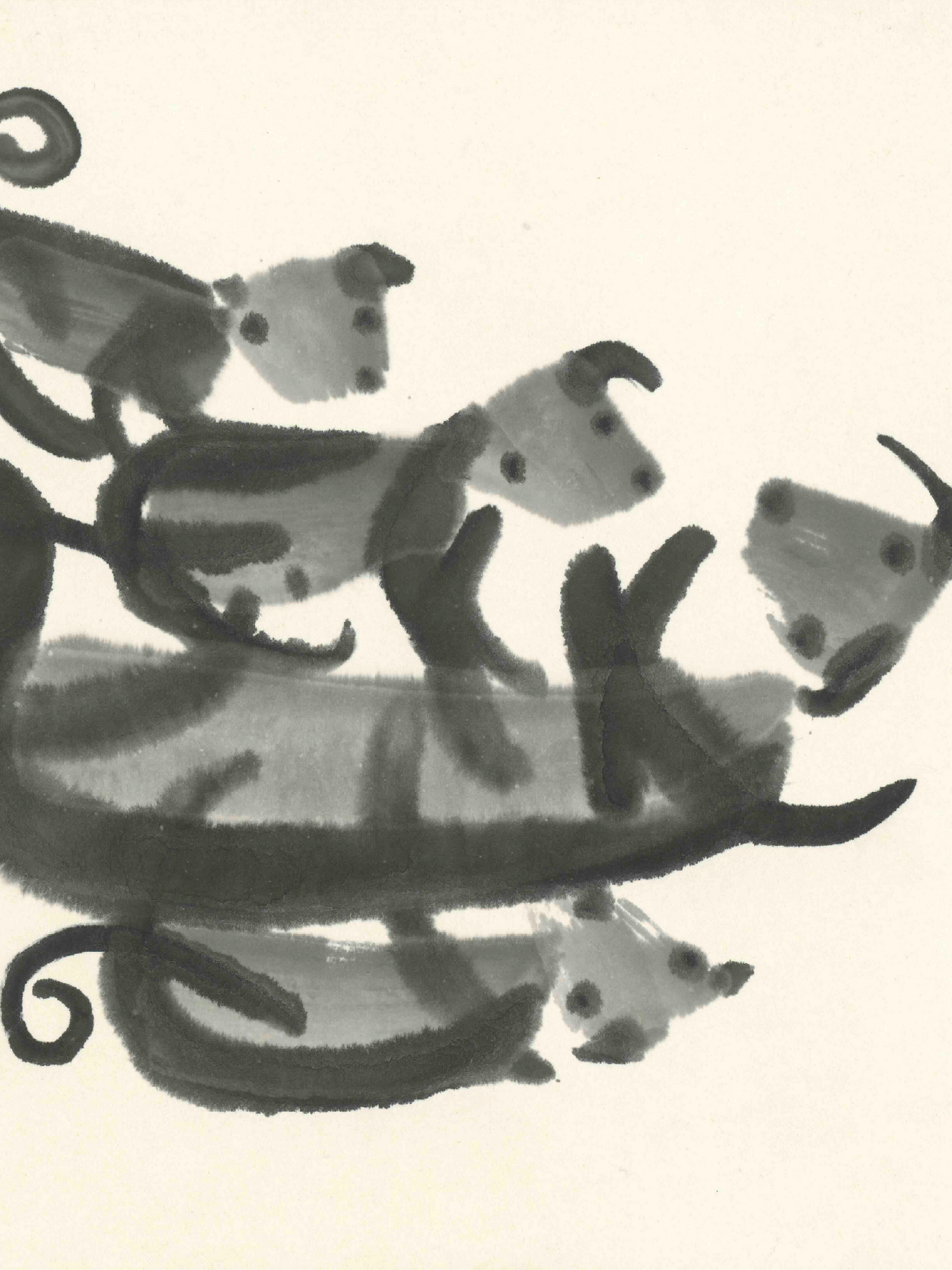
Chen Chi-Kwan (1921–2007) was born in Beiping (present-day Beijing). From an early age, he received a classical education in Chinese literature and calligraphy, studying seal, clerical, regular, running, and cursive scripts, which laid a profound foundation for his traditional aesthetic sensibilities. During the Sino-Japanese War, his family relocated frequently before eventually settling in Chongqing, where he studied architecture at National Central University. After serving as a translator in the China-Burma-India theater during World War II, Chen later traveled to the United States in 1948 to continue his studies. In 1951, he joined Walter Gropius’s architectural firm and was subsequently invited to teach at the Massachusetts Institute of Technology. In 1954, at the invitation of I. M. Pei, he returned to Taiwan to participate in the planning of Tunghai University. He later founded the Department of Architecture at Tunghai University and independently designed and supervised the construction of the iconic Luce Memorial Chapel, establishing his lasting connection with Taiwan. Beyond architecture, Chen Chi-Kwan was also an accomplished painter. Beginning during his years in the United States, he held solo exhibitions at major university museums and galleries across America. His paintings broke away from the conventions of traditional Chinese painting by integrating architectural concepts, spatial imagination, and natural imagery into a highly personal visual language. Viewing the world through what he described as the “mind’s eye,” Chen developed a style that was both refined and unconventional—rooted in the spirit of traditional Chinese literati painting while infused with the ideas and aesthetics of Western modernism. His works expanded the visual possibilities of landscape and reshaped perceptions of beauty and space. Art historian Wu Neisun famously praised him as “the first in three hundred years,” leading to the saying: “One Zhang Daqian in three hundred years, one Chen Chi-Kwan in five hundred.”

尚無其他推薦藝術家