Artist Statement|Huang Chien-Liang
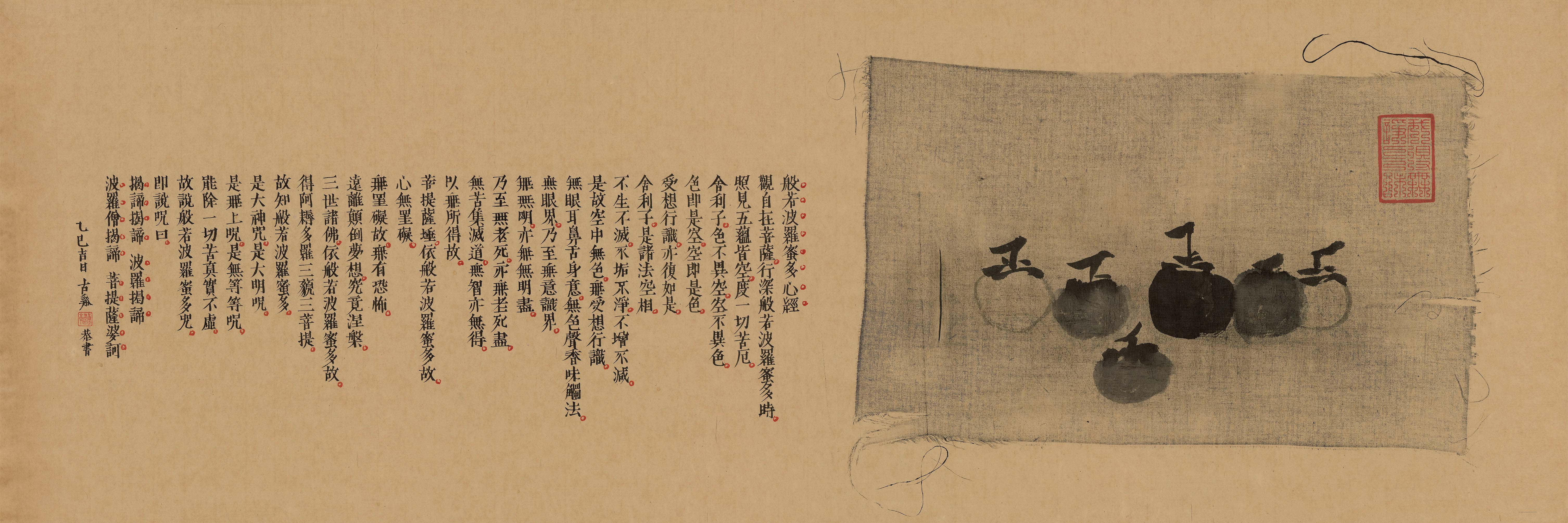
Muqi(牧溪), the Chan monk-painter of the Southern Song dynasty, created Six Persimmons, a work long regarded as a quintessential expression of Zen painting. Chan Buddhism teaches “no reliance on words,” and the six persimmons are said to symbolize the six consciousnesses—the perceptual and cognitive functions of sight, hearing, smell, taste, touch, and mind-consciousness—together forming the foundation of our lived experience.
Now past sixty, I find that five of these senses—sight, hearing, smell, taste, and touch—have grown indistinct, while the sixth, mind-consciousness, has become ever more lucid. Thus, I borrow Muqi’s Six Persimmons as a metaphor to trace the passages of my life.
I was never a diligent reader, yet I have always taken delight in wandering through fragments of text, savoring the pleasure of reading and painting in tandem. The luminous shards left by those before me are like facets of a many-cut diamond—each reflecting, at unexpected angles, a glimpse of my own shadow. And between the lines, there lies a narrow seam—
the very place where the light of art enters.
———
Exhibition Introduction|The Artist’s Parlor: Huang Chien-Liang
In this edition of The Artist’s Parlor, Yi Yun Art is honored to present the works of Huang Chien-Liang. Taking as its point of departure Six Persimmons by Muqi(牧溪), the Chan monk-painter of the Southern Song dynasty, the exhibition traces the artist’s journey from youth to his sixtieth year—a path from the sensitivity and ardor of early years, through the lucidity and introspection of maturity, to the serenity and release that arrive with time. Through the ripening of the persimmon, Huang finds a metaphor for the unfolding of life itself.
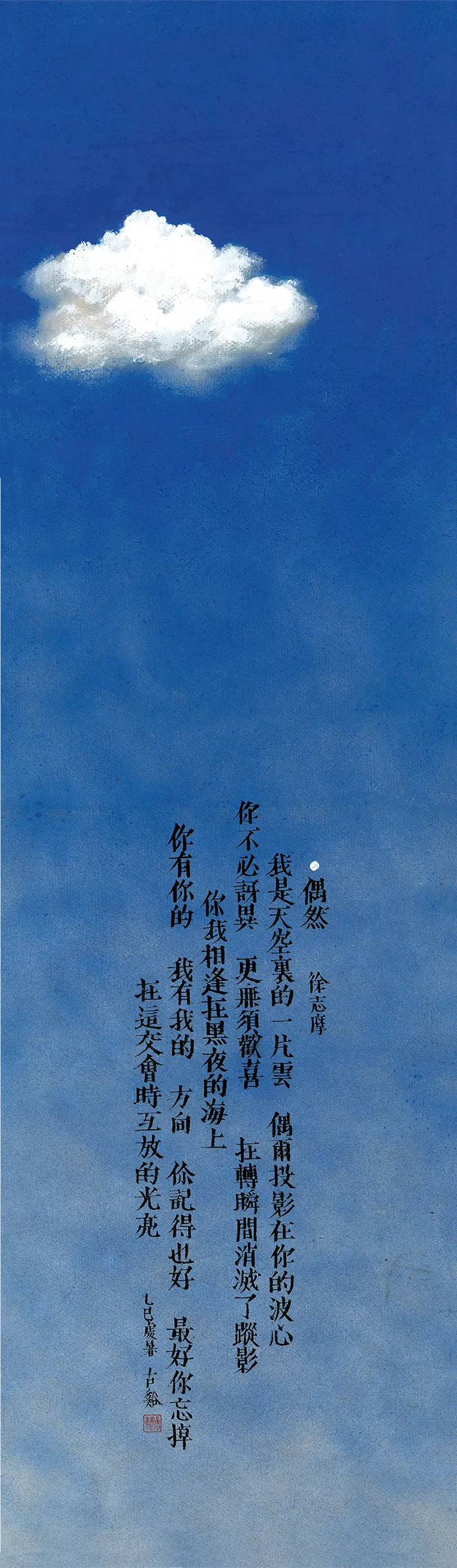
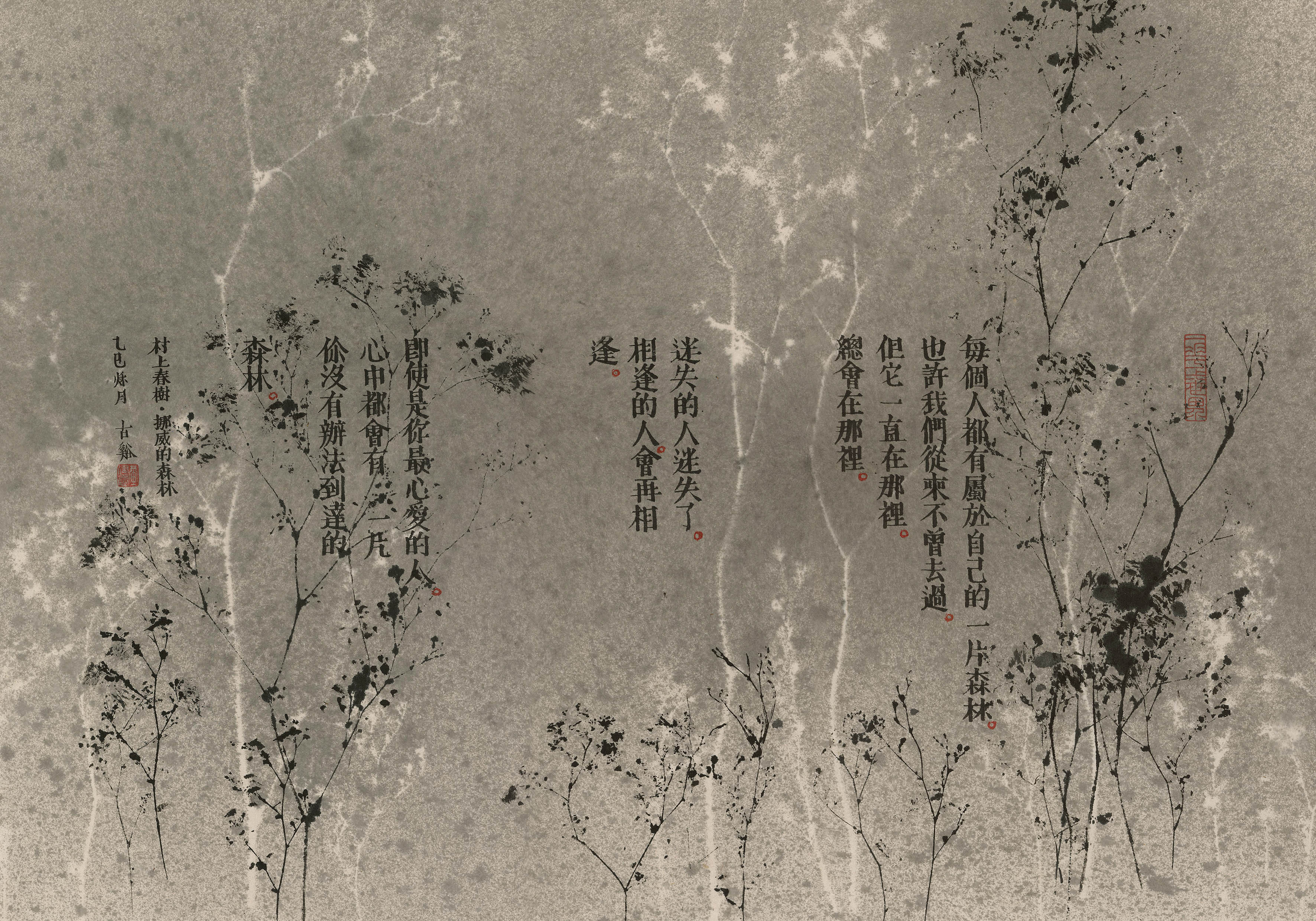
From Xu Zhimo(徐志摩)’s Chance and Zheng Chouyu(鄭愁予)’s Mistake, to Haruki Murakami(村上 春樹)’s Norwegian Wood, Huang Tingjian(黃庭堅)’s Fragrant Blossoms Overwhelm the Mind, Dong Qichang(董其昌)’s Thirteen Discourses on Antiquities, and even the Platform Sutra of the Sixth Patriarch, Huang’s creative practice is rooted in a lifelong dialogue between reading and writing. Within this process, he builds a spiritual discipline of his own—an inquiry that weaves together perception, memory, and time, revealing the quiet insight of “finding joy in what comes, and holding it only for a moment.”
As the sharpness of youth fades and the taste of life mellows, Huang raises a withered lotus stem against a passing breeze, letting art become another form of clarity—a way to understand both the world and oneself.
———
About the Artist|Huang Chien-Liang
Also known by the sobriquet Guqi, Huang Chien-Liang was born in Chiayi, Taiwan, in 1963. He holds a Master of Fine Arts from the National Taiwan University of Arts and has long devoted his practice to the study of tea and the literati, as well as to aesthetic creation rooted in that cultural lineage. His writings and publications on these subjects are extensive. Huang currently serves as a member of the Collection Review Committee at the National Palace Museum in Taipei.
Grounded in a profound understanding of traditional literati life, Huang’s works reinterpret classical ideals through the language of contemporary ink painting. Drawing from ancient woodblock characters and the philosophical depth of traditional literature and daily aesthetics, his art merges text and image with an elegance that is both erudite and restrained.
In an age defined by speed and transformation, Huang turns to the wisdom of the past as a wellspring of renewal. His practice captures fleeting moments of quiet brilliance within a slow, reflective life, revealing the lingering radiance of tradition amid the sifting tides of modernity—subtle, contemplative, and imbued with a timeless sense of grace.


.webp)