


An Inquiry into the World, Tempered over Three Decades: Chang Ling’s If My Homeland Presents the Full Scope of His Artistic Practice
by YIYUN ART
“If My Homeland: Chang Ling solo exhibition” will be presented at Yi Yun Art Qingtian from May 16 to June 20, 2026. As the first solo exhibition formally staged in the gallery space since Yi Yun Art began representing Chang Ling in October 2024, the exhibition marks an important milestone for both the gallery and the artist.
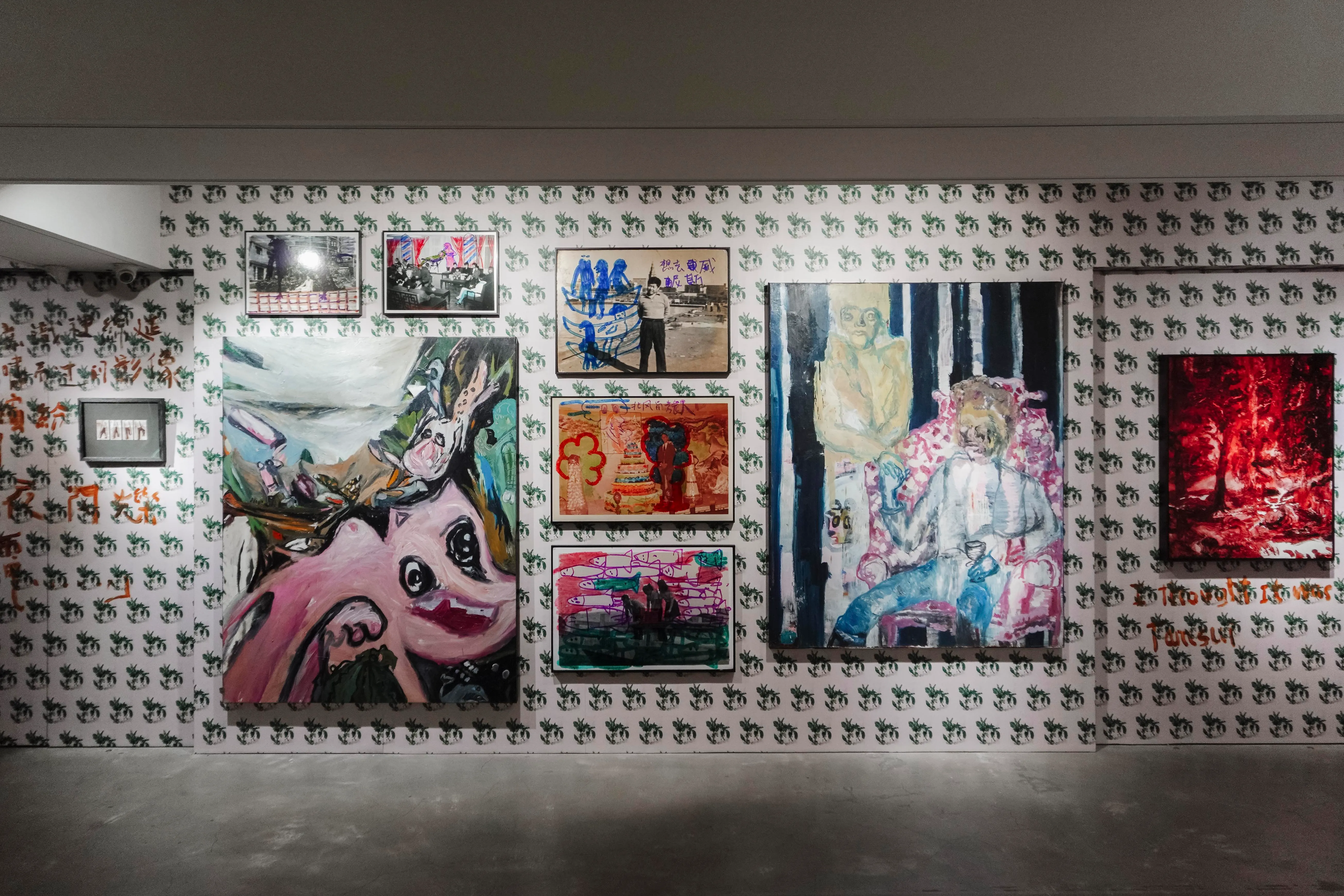
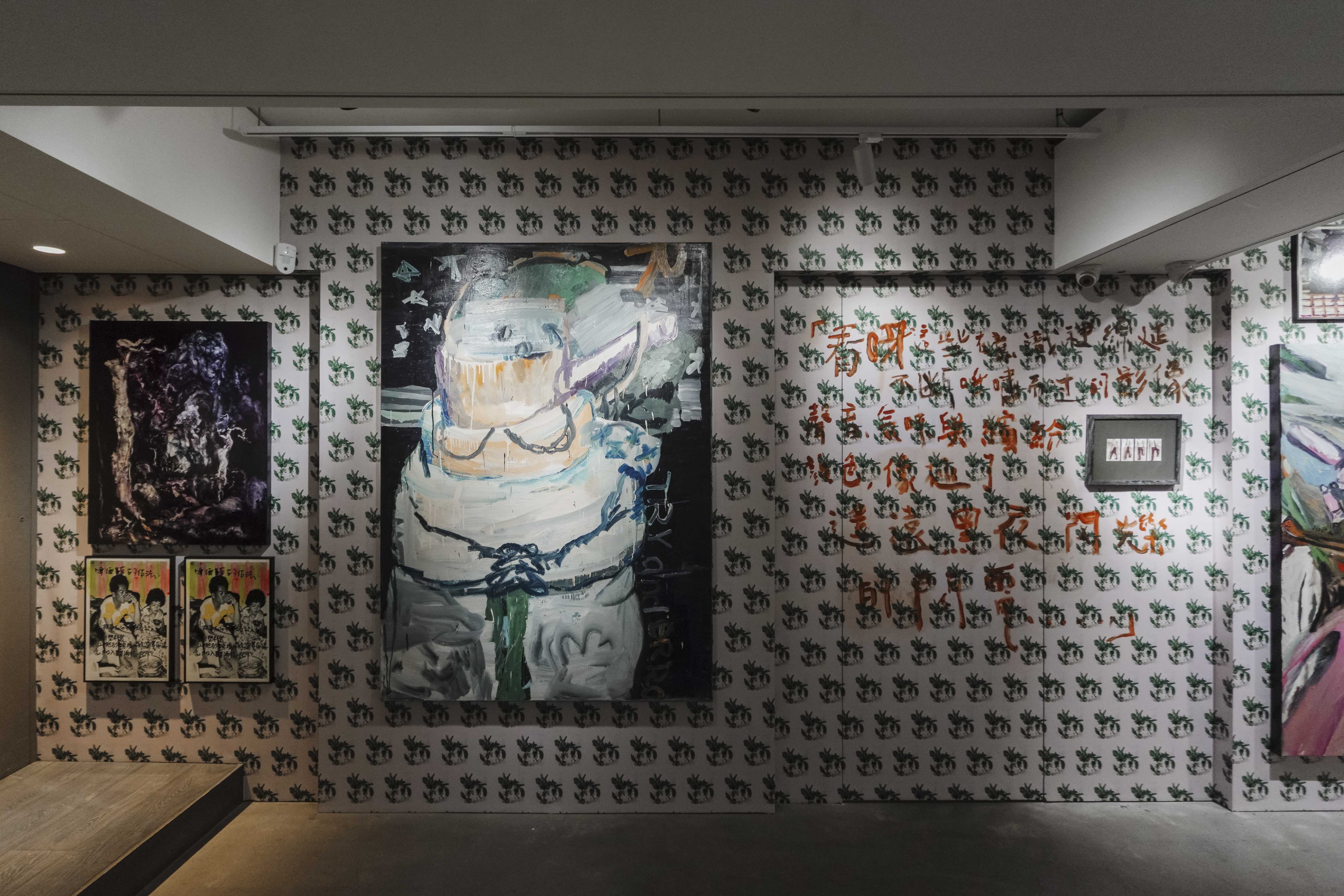
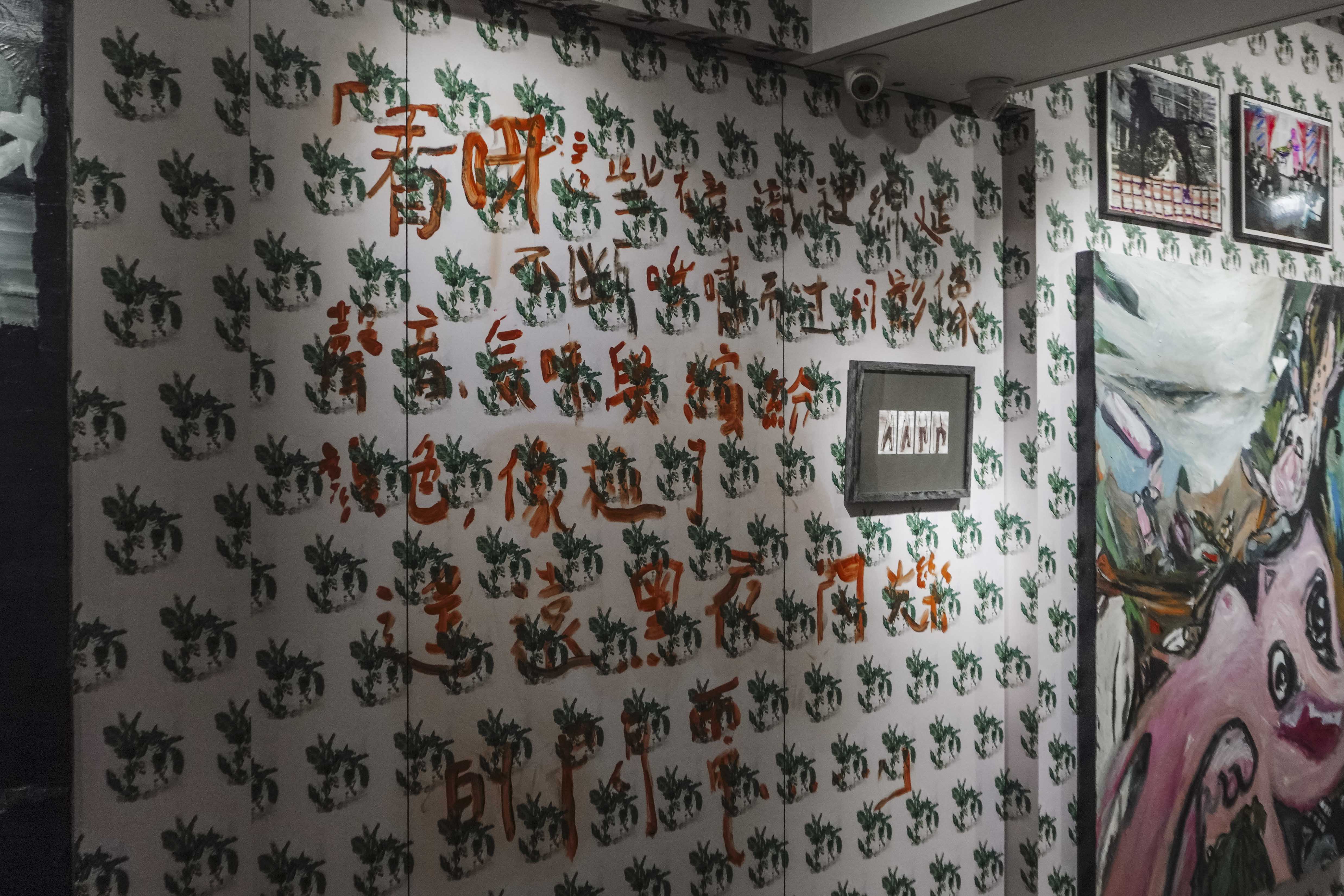
In conceiving the presentation of this exhibition, Chang Ling departs from his earlier mode of display, which centered primarily on individual paintings. Instead, the exhibition extends the spatial approach seen in his 2023 solo exhibition War Preparation at MoCA Taipei, and perhaps may be traced even further back to one part of his 2019 solo exhibition Illusion Society: Historical Daily at the Kaohsiung Museum of Fine Arts. Here, the entire exhibition space is regarded as an extension of the artist’s subjectivity. In this sense, each work in the exhibition, both materially and symbolically, may be understood as the manifestation of those rapidly flickering “thoughts” that emerge in Chang Ling’s creative process.
This exhibition brings together several of Chang Ling’s major bodies of work, including Streaky Pork, Illusion Society, The Great Clod, Pseudo-Arrogance, On the Brink of Paradise, and If My Homeland. Precisely because these series are gathered here without being separated into archival categories, the exhibition allows the multiplicity of the artist’s subjectivity, the continuity of experience and time, and the relationship between the artist and his works to become more clearly visible within the trajectory of Chang Ling’s practice. Through the images, viewers are invited to look toward a fuller picture of an artist’s life, experience, thought, and body of work.
The title If My Homeland originates from Chang Ling’s inquiry into “the abstractness of homeland.” As he states: “Homeland is something deeply abstract. Its abstractness lies in the reorganization of memory, and in the addition of new things. Through this process of addition, it also becomes distorted. Or perhaps the things being added are not really mine. They are more like things instilled by a collective consciousness: smells, sounds, images. That is why the word ‘if’ exists in the title.”
Taking this question as a point of departure, Chang Ling observes the ways in which contemporary human beings acquire information and perceive experience, and how the two generate one another before being circulated once again. As daily life, social atmosphere, and international circumstances continue to shift, the overwhelming flow of information enters our physical and psychological worlds without pause, constantly altering the ways in which we once understood reality. In this process, we seem to find ourselves in a state that is both secure and anxious: as though we can see the world more clearly than before, while finding it harder than ever to recognize where we stand within it.
Chang Ling has also mentioned that thoughts are constantly and rapidly surfacing in his mind, and that he must look at them without following them, observing those barely discernible thoughts as they arise. It may be understood that, once “overspeeding” has become the inertia of our time, people are increasingly expected to understand quickly and take a position immediately. Amid such turbulence, we both desire and increasingly depend on narratives that appear clear, assured, and almost truth-like. These narratives also seem to show a gradual tendency toward homogenization. Under such conditions, perhaps only in a deliberately suspended pause can we cease the passive reception of signals from the world, and open a space from which the individual may send forth an active response.
It is therefore Chang Ling’s questions toward the age in which he lives that form the true value of his practice. In his performance-installation work One Day I Will Ask Nothing in Paris, he expressed, through the act of begging in eight directions, a human condition of “needing everything because one has nothing at present.” In the Streaky Pork series, he reflected on a question he once encountered in Paris: “You are Asian, so why does your work show no trace of your cultural background?” As transparent oil paint flowed across the canvas to form the fresh flesh of homeland, a creative context distinct from Western painting, and singularly belonging to Chang Ling, emerged with striking force.
At the same time, Chang Ling became aware that once a habitual mode of painting has been established, creativity may also become constrained by the body’s habitual gestures. This realization prompted him, through continuous self-questioning, to develop Illusion Society, a proposition elevated toward the relationship between human beings and society. In this series, absurd yet everyday portraits of human nature stir the emotional tension within events, at times sharply and at times in a blurred, indistinct manner.
The Great Clod confronts the source from which consciousness arises, what Chang Ling refers to as “the first stirring of thought.” These thoughts rise and recede in the mind like great tides; they surge, disperse, and remain without fixed form. Thus, he departs from figurative form, using abstraction to respond to the successive instants of the mind and spirit.
Pseudo-Arrogance unfolds like a fantasy through graffiti-like markings on old photographs, branching into misplaced realities. The original context has long been lost, while the question of whether future memory may also belong to memory itself perhaps echoes the strange mentality with which human beings gaze upon antiquities, or upon a passage of time from the past.
The recent series On the Brink of Paradise depicts the happy life longed for by the human heart. It seems close at hand, yet remains physically or spiritually not quite arrived, and thus becomes a distant place one must pursue throughout life.
If My Homeland reveals the truth that the world itself is always in flux. Within this state of flux, it asks how contemporary human beings, under the increasingly profound influence of algorithms and image-generating mechanisms, may come to recognize paradox, embrace uncertainty, and once again discern the authenticity of their own experience.
Through If My Homeland, Yi Yun Art hopes to present Chang Ling’s more than three decades of artistic accumulation to audiences in a more comprehensive manner. As Chang Ling recently remarked in an interview: “So now, for me, to record these things from the past, these painting concepts, or certain things from the past, you might call them inspiration. But because they move so quickly, I think it is difficult to describe them that way. “Yet without my noticing, it (the accumulated concepts of painting) comes to present a kind of diversity centered on myself as the subject. Perhaps, on a certain level, this diversity is what better addresses the question of the creative subject. It is better able to express the many facets and many processes of being an artist, rather than simply repeating and presenting a single aspect. If one keeps repeating within a single aspect, it is like a beam of light shining on the artist: you can only see the right side of his face, but not the whole picture.”
///
Related Exhibition: